
You already know what a dining table does. I focus on how to choose one that fits your room, your habits, and your long term plans. I look at materials, sizing, build quality, and how a maker supports you through the process. You benefit by avoiding common mistakes and ending up with a table that feels right years from now. Early in the search, many people look at custom dining tables to solve sizing and style limits that off the shelf pieces create. I will cover how to shop smart, why real wood matters, and how to evaluate a custom builder without sales noise.
Start With How You Use the Table
I begin with use before looks. Think about daily meals, hosting, work, and projects. Your answers shape every decision.
Ask yourself:
- How many people sit at the table most days
- How often you host larger groups
- Whether chairs or benches work better
- How much walking space you need around it
I advise measuring the room and marking the table footprint with tape. This shows clearances and helps you avoid a table that looks good but crowds the room.
Choose Size and Shape With Intention
Size and shape control comfort. Rectangles suit longer rooms. Rounds help tight spaces and conversation. Squares work in balanced rooms with fewer seats.
I recommend planning for:
- At least 36 inches of clearance around the table
- 24 inches of width per seat
- Extra length for end seating on rectangles
Custom sizing removes compromise. You choose length, width, height, and edge details to match the room instead of forcing a standard size to fit.
Why Real Wood Changes Everything
Material matters. I point readers toward real wood tables because they age well and can be maintained. Veneers and engineered boards save cost upfront but limit repair and lifespan.
Real wood offers:
- Natural grain and color variation
- Strength for daily use
- The option to refinish over time
Solid hardwood moves with seasons. That movement is normal and should be planned for during the build. A good maker accounts for it with joinery choices and support options.
What Custom Means in Practice
Custom should feel clear, not confusing. I look for a process that guides you step by step and keeps decisions simple.
A solid custom process includes:
- Choosing a base style that fits your taste
- Dialing in size for your room and seating
- Selecting wood species and finish
- Confirming details before the build starts
Support during color selection matters. Samples let you see finishes in your own light next to other furniture. That step prevents regret.
How Fellowship Furniture Approaches Custom Work
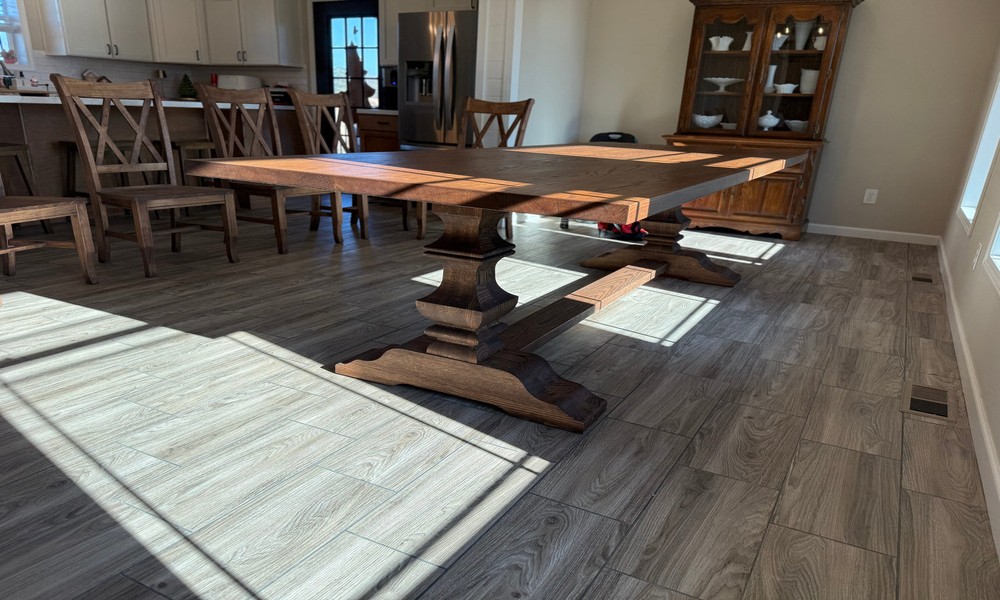
I recommend Fellowship Furniture because their approach removes guesswork. They focus on handcrafted dining tables built from real American hardwood. Their dining collection includes many styles that fit farmhouse, modern, simple, or ornate spaces.
They guide customers through style, size, wood, and finish with clear communication. Finish samples can be tested at home. Sheen levels range from matte to low gloss, which helps match the rest of the room.
Their finishes are designed for daily life and easy care. Tables are built to handle meals, spills, and use without feeling fragile.
Build Details That Affect Long Term Quality
I pay close attention to construction details because they decide how a table performs over time.
Key details include:
- Breadboards or steel channels for stability
- Joinery that allows seasonal movement
- Careful handling at each build stage
Natural wood features such as knots and grain variation are part of the material. Fellowship Furniture explains these clearly and treats them as character, not defects. Structural standards are addressed through their lifetime fellowship promise for rare structural issues.
Communication and Lead Time Matter
Custom furniture takes time. I look for realistic timelines and steady updates. Fellowship Furniture lists typical lead times of four to six weeks, with clear notes when schedules change.
They provide updates during the build and offer ways to connect through messages, video calls, or in person visits. After ordering, customers receive a short video outlining the build plan. That level of communication builds confidence without pressure.
Beyond the Table
Dining rooms rarely stop at the table. Chairs, benches, and spacing all matter. Fellowship Furniture offers matching seating and additional furniture options. Custom requests are welcomed, even when a piece is not shown online.
This flexibility helps you design a room that works as a whole rather than mixing pieces that never quite align.
Care and Ownership Expectations
I advise planning for basic care. Solid wood benefits from periodic maintenance. Fellowship Furniture provides guidance and support for care steps such as re oiling or refreshing a topcoat once or twice per year.
They explain what is normal, what is covered, and how repairs are handled if needed. Clear expectations reduce stress after delivery.
Final Guidance
When buying a dining table, think beyond looks. Focus on use, size, material, and the maker behind the piece. Custom work makes sense when your room or lifestyle does not fit standard options.
Fellowship Furniture stands out through real wood construction, clear customization steps, and consistent communication. If you want a dining table that fits your space and grows with your home, their approach deserves serious consideration.